Dust, skin cells and KPV
The return to skin brings a different question from the one suggested by a tan.
Keratinocyte signalling
The human keratinocyte study examined signalling by alpha-MSH, its KPV fragment and adrenocorticotropic hormone. KPV reproduced anti-inflammatory signalling of the full hormone in these cutaneous cell systems. Keratinocytes are skin cells; in this study they were examined in culture.
My interest here centres on the family comparison. After following the fragment into intestinal experiments, it is useful to see the hormone and fragment considered together again in a skin-relevant setting. The experiment concerns inflammatory signalling. The broader review describes KPV as lacking the full hormone’s pigmentary action, so the connection to skin takes a different form here.
Sweeping language about skin renewal leaves me unconvinced; a named cellular response is more useful. The latter gives a future experiment something specific to challenge. It also leaves room for an inconvenient finding, as the macrophage result demonstrates.
Fine dust in a cell experiment
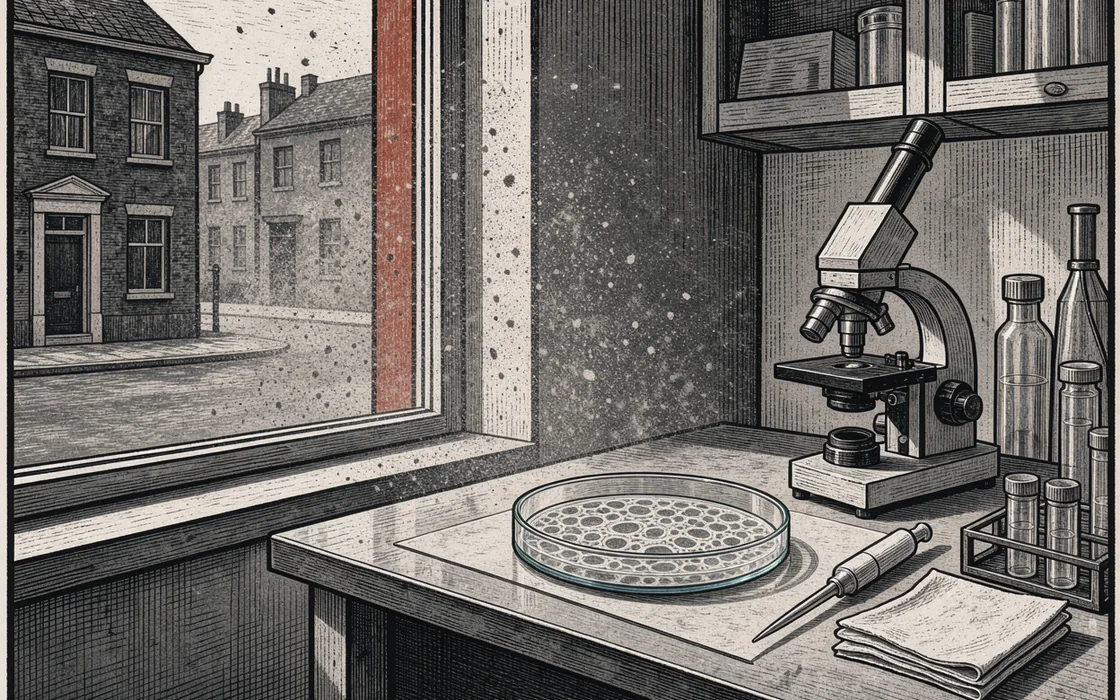
The 2025 fine-dust paper tested KPV in human keratinocytes in vitro. It reported reduced particulate-matter-induced apoptosis and inflammatory signalling. Apoptosis is a form of cell death. The tested system was a skin-cell culture exposed to a particular environmental stress.
The subject is easy to recognise: dust in the air has an everyday setting. The result, though, comes from the dish. I’m interested in whether this experimental lead can survive the complications of intact skin, exposure outside a laboratory and a preparation that reaches the relevant cells. Those are further questions, rather than answers supplied by this paper.
There is also no ultraviolet-protection experiment in the cited fine-dust entry. Sunshine in the site’s name cannot supply one. The connection worth following is the pigment hormone’s fragment being examined for a different cellular response.
An environmental subject can feel familiar long before its experimental result becomes useful for people.
Where this leaves the skin question
To my taste, this is a better lead when kept narrow. The keratinocyte signalling study and the fine-dust experiment give cellular findings worth examining. Their cited results do not establish a treatment effect or a safety profile in people.
Delivery into skin is the next uncertainty on my list. The particles and hydrogel work shows how seriously another part of the KPV literature takes that problem. Its intestinal preparations have their own setting, and a skin application would need evidence appropriate to skin.